Need Help Identifying Growing Markets and Pricing Your Products Right? Refer To Conjoint Analysis

microscope-analysisIdentifying what the market wants is a critical issue for most executives.  Likewise, the decision on how much to charge for a product is also crucial for planners.  This is where Market Research comes to rescue.

One of the Marketing Research methods that researchers most commonly employ is the Conjoint (Trade-off) Analysis.  Conjoint Analysis helps in identifying product features that consumers prefer, discerning the impact of price changes on demand, and estimating the probability of product acceptance in the market.

In contrast to directly inquiring from the respondents about the most important feature in a product, Conjoint Analysis makes the survey participants assess product profiles.  These product profiles comprise various linked—or conjoined—product features, therefore the analysis is termed “Conjoint Analysis.”  Conjoint Analysis simulates real-world buying situations where the researchers statistically determine the product attributes—that carry the most impact and are attractive to the participants—by substituting the features and recording the participants’ responses.

The Conjoint Analysis Approach

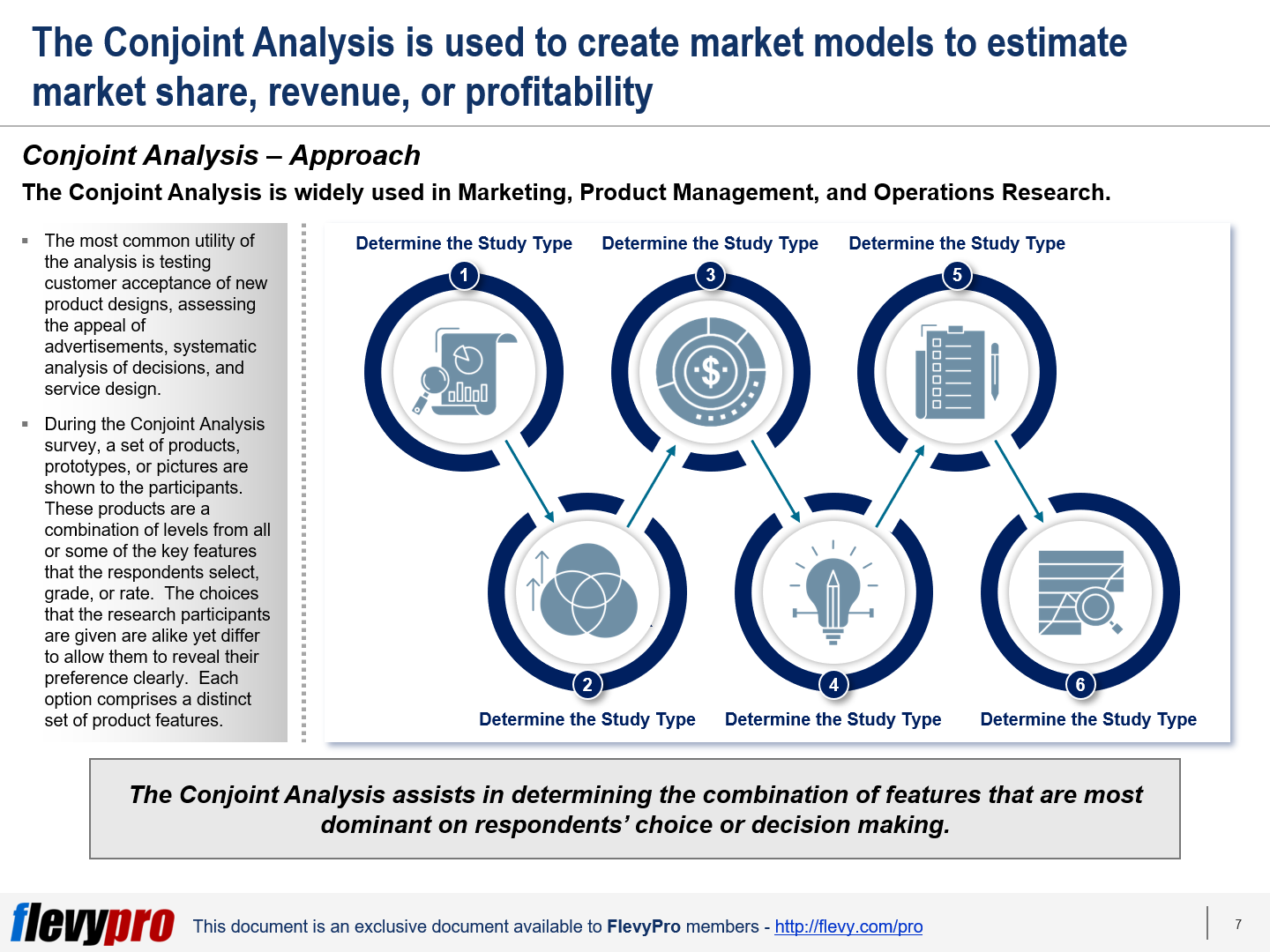
The Conjoint Analysis is useful in creating market models to estimate market share, revenue, or profitability.  The Conjoint Analysis is widely used in marketing, product management, and operations research.  The Conjoint Analysis approach entails the following key steps:

  1. Determine the Study Type
  2. Identify Relevant Features
  3. Establish Values for Each Feature
  4. Design Questionnaire
  5. Collect Data
  6. Analyze Data

1. Determine the Study Type

The first step of the Conjoint Analysis involves ascertaining and selecting from a number of different types of Conjoint Analysis methods available.  This should be determined based on the individual requirements of the organization.

2. Identify Relevant Features

The next step of the Conjoint Analysis entails categorizing the key features or relevant attributes of a product.  For instance, setting the main product attributes in terms of size, appearance, price.

3. Establish Values for Each Feature

After selecting the key features of the product, the next step in Conjoint Analysis is to choose some values for each of the itemized features that have to be enumerated.  A combination of features in different forms should be chosen to present to the participants.  The presentation could be written notes describing the products or in the form of pictorial descriptions.

4. Design Questionnaire

The basic forms of Conjoint Analysis—practiced in the past—encompassed a set of product features (4 to 5) used to create profiles, displayed to the respondents on individual cards for ranking.  These days, different design techniques and automated tools are used to reduce the number of profiles while maintaining enough data availability for analysis.  The questionnaire length depends on the number of features to be evaluated and the Conjoint Analysis type employed.

5. Collect Data

A statistically viable sample size and accuracy should be considered while planning a Conjoint Analysis survey.  It is up to the senior management to decide how they want to gather the responses—by taking the responses from each individual and analyzing them individually, collecting all the responses into a single utility function, or dividing the respondents into segments and recording their preferences.

6. Analyze Data

Various econometric and statistical methods are utilized to analyze the data gathered through the Conjoint exercise.  This includes linear programming techniques for earlier Conjoint types, linear regression to rate Full-Profile Tasks, and Maximum Likelihood Estimation (MLE) for Choice-based Conjoint.

Types of Conjoint Analysis

There are a number of Conjoint Analysis types available for the marketing researchers to choose from, including:

  1. Two-Attribute Tradeoff Analysis
  2. Full-Profile Conjoint Analysis
  3. Adaptive Conjoint Analysis
  4. Choice-Based Conjoint Analysis
  5. Self-Explicated Conjoint Analysis
  6. Max-Diff Conjoint Analysis
  7. Hierarchical Bayes Analysis (HB)

Interested in learning more about Conjoint Analysis?  You can download an editable PowerPoint on Conjoint Analysis Primer here on the Flevy documents marketplace.

Are you a Management Consultant?

You can download this and hundreds of other consulting frameworks and consulting training guides from the FlevyPro library.

Understanding The Importance of Organizational DNA: 10 Core Principles

Organizations can change over the years. Change may happen because that is what the customers expect or it is because the organization gets to have even the most pic 1 Organizational DNA 10 Core Principlescoveted skills. Despite the changes, there are those that stay the same—the organization’s brand, its unique culture, and its shared lexicon. These are the underlying organizational and cultural design factors that define an organization’s personality. Metaphorically, these are called Organizational DNA. The Organizational DNA can indicate whether the organization is strong or weak in executing strategy.

Today, execution has come to a fore as organizations fail to effectively implement strategies. Organizations now realize that it must first resolve this dysfunction by understanding how the inherent traits of an organization influence and even determine each individual’s behavior. The idiosyncratic characteristics of an organization can be codified using the DNA. When the DNA of an organization is purely configured, unhealthy symptoms and counterproductive behaviors are demonstrated. High performing organizations have shown that there are precepts that they closely follow to ensure that their Organizational DNA is in order.

The 10 Principles of Organizational DNA

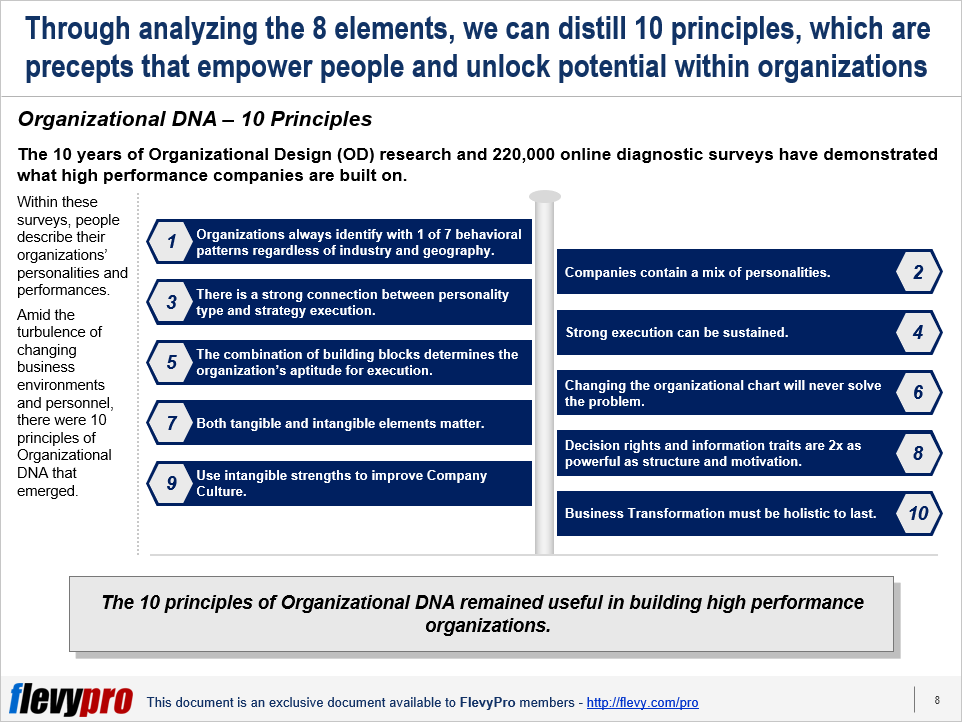
The 10 Principles of Organizational DNA are the precepts upon which high-performance companies are built on.

Let us take a look at 5 of the 10 Principles of Organizational DNA.

  1. Organizations always identify with 1 of 7 behavioral patterns regardless of industry and geography. Enterprise-wide behavior can either be passive-aggressive, overmanaged, outgrown, fits-and-starts, just-in-time, military-precision, or resilient. The complication here is that companies can face and conquer even the most pernicious performance problems by changing personalities. When this happens, it is crucial that the company must be ready for any problems that may arise as a result of the change in personality type. The inability to address these problems may be detrimental to the organization. Changing personality is not easy. It must be well-studied and strategically planned.
  1. Companies contain a mix of personalities. Business units fall under different archetypes, particularly in major acquisitions. At this stage, it is possible that a resilient organization may have a division that matches the fits-and-starts profile, characterized by smart entrepreneurial talent. However, despite that, it may lack the collective discipline necessary.
  1. There is a strong connection between personality type and strategy execution. In the survey conducted, 48% of the respondents fit a profile that is distinguished by weak execution. Passive-aggressive organizations may have people who pay lip service to results but they may consistently undermine some necessary efforts.
  1. Strong execution can be sustained. Organizations with a strong execution archetype cannot afford to be complacent. Leaders must continually seek feedback from the market, encourage and act on criticism from customers and frontline employees, and take action to address minor issues. These must be done before any problem gets bigger.
  1. The combination of building blocks determines the organization’s aptitude for execution. Organization DNA is made up of 4 building blocks. These are decision rights and norms, motivation and commitments, information and mindsets, and structure and networks. Complications may come in when companies decide to improve execution. At this point, building blocks must be considered and these must be considered as a whole and not individually.

The other 5 core principles of Organizational DNA are essentially necessary. Even the company with the most desirable profile, the resilient organization, must continually stay at the top of the game. Hence, it is essential that organizations must adopt the most appropriate behavioral pattern and personality to be able to build high-performance organizations. Strategy Development must be able to integrate into the organization’s Business Transformation the 10 core principles of Organizational DNA.

Interested in gaining more understanding of these  principles of Organizational DNA?? You can learn more and download an editable PowerPoint about Organizational DNA: 10 Core Principles here on the Flevy documents marketplace.

Are you a management consultant?

You can download this and hundreds of other consulting frameworks and consulting training guides from the FlevyPro library.
The Power of the 5 Cost Management Strategies in Reducing Costs

A commonly quoted statistic is that 80% to 95% of the cost of a product is determined by its design and is therefore set before the item enters manufacturing. This pic 1 5 Cost Management Strategiesassumption suggests that the dominant focus of Cost Management should be during Product Development and not during Manufacturing.

However, contrary to a widely held assumption, companies can integrate a variety of Cost Management techniques not only in the design phase but throughout the product life cycle.  This is to ensure that there is a substantial reduction in costs.  In fact, companies achieving Operational Excellence and competing aggressively on cost might consider the adoption of some form of an Integrated Cost Management Program that spans the entire product life cycle.

An organization must have a good understanding of Integrated Cost Management and the 5 Cost Management Strategies that they can use to reduce costs but still attain the desired level of functionality and quality at the target costs.

The 5 Cost Management Strategies

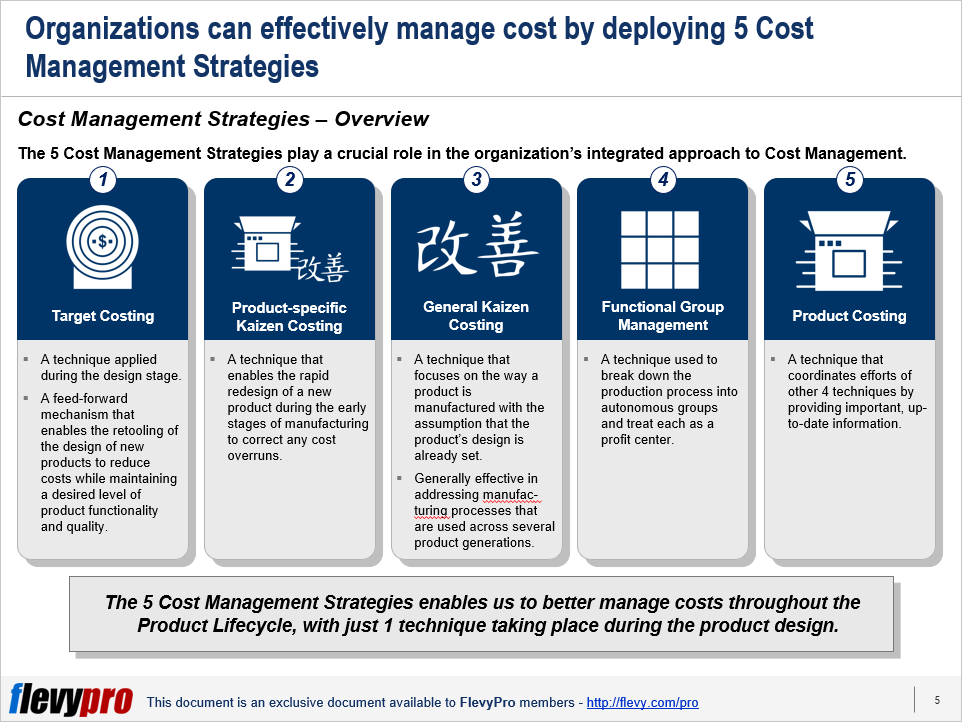
 The 5 Cost Management Strategies play a crucial role in the company’s integrated approach to Cost Management.

The 5 Cost Management Strategies can be applied throughout the product life cycle with one technique used during the product design and the rest during manufacturing.

  1. Target Costing. This is a technique applied during the design stage. Target Costing is best used when the manufacturing phase of the life cycle of a product is short.
  1. Product-specific Kaizen Costing. This is a technique applied during the early stages of the manufacturing phase. It enables the rapid redesign of a new product to correct for any cost overruns. The primary rule in Product-specific Kaizen Costing is that the product’s functionality and quality have to remain constant.
  1. General Kaizen Costing. The third Cost Management Strategy, this technique is applied during the manufacturing phase. It focuses on the way a product is manufactured with the assumption that the product’s design is already set.  This technique is effective when addressing manufacturing processes that are used across several product generations.
  1. Functional Group Management. This is the technique that is applied in the production process. Functional Group Management consists of breaking the production process into autonomous groups and treating each group as a profit instead of a cost center. The switch to profit as opposed to cost allows groups to increase the throughput of production processes even if changes result in higher costs. It enables the change in mindset that functional group management induces.
  1. Product Costing. The 5th Cost Management Strategy, this is the technique that coordinates the efforts of the other four techniques. It does coordination work by providing the other four techniques with important, up-to-date information.

Target Costing vis-a-vis Kaizen Costing

Kaizen Costing as known as continuous improvement costing.  It is a method of reducing managing costs. Kaizen Costing has a similarity with Target Costing but it also has its differences.  (Note: Kaizen is the Japanese term for Continuous Improvement and often tied to the philosophy of Lean Management.)

Both Kaizen Costing and Target Costing can achieve results with lower resources. This is basically their similarity. On the other hand, the differences lie in their usage and involvement.

Target Costing is used on the design stage and requires the involvement only of designers. On the other hand, Kaizen Costing is used during the manufacturing stage and requires high involvement of employees.  The general idea of Kaizen Costing is to determine target costs, design products, and process to not exceed those costs.

Interested in gaining more understanding of these Cost Management Strategies? You can learn more and download an editable PowerPoint about 5 Cost Management Strategies here on the Flevy documents marketplace.

Are you a management consultant?

You can download this and hundreds of other consulting frameworks and consulting training guides from the FlevyPro library.

COVID-19: 10 Trends in Consumer Behavior

COVID-19 has taken the world by a storm. Financial markets, manufacturing, services, and tourism have been hit hard.  In fact, it has also changed the way we work, communicate, interact, and shop more than any other disruption in the decade.

As a result, there have been key changes in Consumer Behavior. There is a growing reluctance to visit crowded places, the increasing shift of work from the office to home, and the higher propensity for digital adoption and Digital Transformation.  The changes are inevitable. For businesses to stay relevant, businesses have to adjust to the new norms.

We are now entering the Low Touch Economy, a new normal where there are behavioral shifts and entirely different rules and policies.

A Glimpse of the Low Touch Economy

A new economy will be shaped as a result of new habits and regulations. There will be reduced close-contact interaction, tighter travel, and hygiene restriction.

The global economy will transition into a Low Touch Economy as an aftermath of the COVID-19 2020 crisis.  A Low Touch Economy will be characterized by entirely different rules and policies, habits, and behaviors. New rules and policies will be passed that will limit the number of people gathering, restrict travels, hygiene requirements, and strict adherence to practices that will ensure the protection of vulnerable groups.

In the work organization, there will be more people working from home and there will be a greater need for access to e-commerce and logistics.  With the Low Touch Economy, traditional business and lifestyle norms will be greatly challenged and behavioral shifts occurring.

The 10 Trends in Consumer Behavior

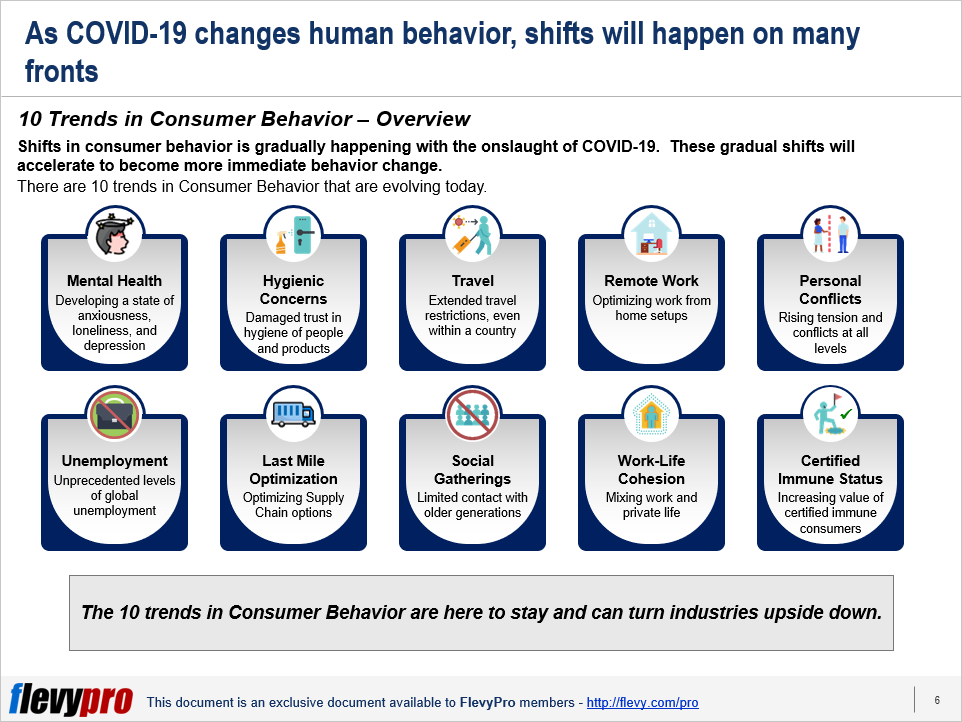
While COVID-19 has made a great dent in the global economy, it has also triggered a shift in human behavior. There are 10 trends in Consumer Behavior driven by COVID-19 that are becoming more and more prevalent.

Let us take a look at the first 4 Trends in Consumer Behavior.

Trend 1: Mental Health

As a result of COVID-19, there is an increasing state of anxiousness, loneliness, and depression.  People have started feeling isolated, experiencing lower productivity, and even loss of a job. Relationships have also been affected and the cost of healthcare increased.

Trend 2: Hygienic Concerns

The second trend is geared more on limiting COVID-19 exposure on the job.  It is the ability to respond to varying levels of disease transmission through prevention and control measures.

As a result of this trend, there has been increased caution when interacting with people and products.  In fact, establishments, offices, and even individuals are increasingly demanding for formal proof of hygiene and current health status.

Trend 3: Travel

Travel and Tourism is the trend that has the biggest impact as an industry.  There are now extended travel restrictions, even within one’s country.

We can expect local tourism to flourish and there will be longer extensive holidays with quarantine taken into consideration.

Trend 4: Working from Home

Trend 4 is a COVID-19 preventive measure that used to be an office perk.  There is now a need to optimize remote work home setups, which are beyond typical office jobs. As a result of this trend, individuals and families will start figuring out news ways to balance work-life needs within the confines of home.

With more people working from home, we can expect a reduction in office space and infrastructure.  At the home front, there will be the presence of special equipment, machines, and advanced video/audio setups to accommodate the change in lifestyle.

There are 6 other trends on Consumer Behavior that have propped up as a result of the COVID-19 pandemic. With these trends, there are response mechanisms we can expect from organizations, families, and even individuals.

What to Expect

With the changes that the COVID-19 pandemic has brought, we can expect organizations to come up with response mechanisms that will address concerns arising from these trends. Relative to mental health, risk-stratified crisis counseling needs to be initiated as additional support to employees. In fact, it is essential that organizations provide comprehensive benefits for their employees that will center on mental health.

For each trend, a corresponding response mechanism must be put in place if we are intent on ensuring the well-being of our employees and the continuity and stability of our organization.

Interested in gaining more understanding of 10 trends in COVID-19-driven Consumer Behavior? You can learn more and download an editable PowerPoint about COVID-19: 10 Trends in Consumer Behavior here on the Flevy documents marketplace.

Are you a management consultant?

You can download this and hundreds of other consulting frameworks and consulting training guides from the FlevyPro library.
Team Resilience In the Midst of COVID-19: Turbocharging Your Organization Against Disruptions

The uncertain times, coupled with the COVID-19 pandemic, have spur leaders to reflect on what kind of organization, culture, and operating model they need to put Pic 1 Team Resiliencyin place. This is to avoid returning to previous patterns of behavior and instead, be able to embrace the next normal.

In this rapidly changing environment, people in organizations need to respond with urgency, without senior executives and traditional governance slowing things down. Waiting to decide, or even waiting for approval, is the worst thing to happen. Today, some level of coordination across teams and activities is crucial for the organization’s response to be effective.

Getting Ready for Business Resilience

Business Resilience is a management approach that integrates many disciplines into a single set of integrated processes. It is an enterprise-wide term that encompasses Crisis Management and Business Continuity.

Business Resilience enables organizations to face a wide range of risks—risks that can cause long-term harm, from a financial penalty to reputational damage. This is further emphasized with the global economy greatly affected by COVID-19, a pandemic that has overturned business and rattled the entire global business environment.

Addressing the COVID-19 pandemic

Leaders across industries cannot treat the Coronavirus pandemic like any other event. COVID-19 is unlike any other event. No single executive has the answer. In this rapidly changing environment, organizations need to respond with urgency. There are several initiatives that can be undertaken and integrated in Strategy Development. One of these initiatives is to build Team Resilience through the creation of a Network of Teams.

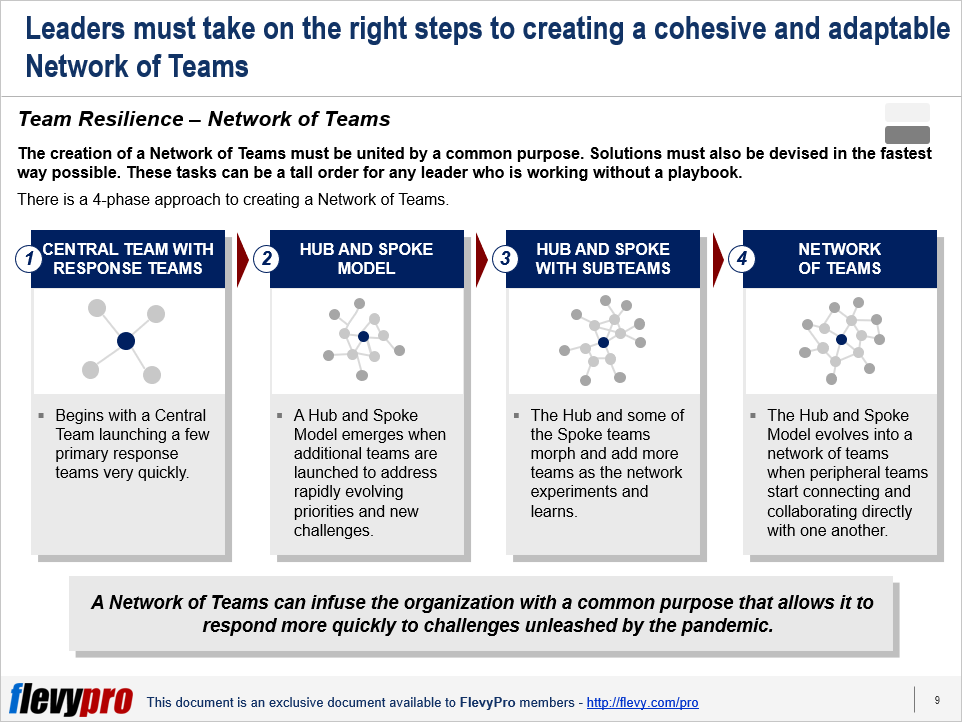
A Network of Teams is a cohesive and adaptable network of teams that are united by a common purpose. It is empowered to operate outside of the current hierarchy and bureaucratic structures of the organization.

The 4-phase Approach to Creating a Network of Teams

The Network of Teams needs to be created in phases for it to be effectively cohesive and adaptable.

Phase 1: Central Team with Response Teams. Phase 1 begins with a Central Team launching a few primary response teams very quickly. There are several key considerations that must be underscored in Phase 1.

Organizations must create teams that will tackle current strategic priorities and key challenges facing the organization. The model that is to be built must be flexible and capable of shifting when mistakes happen. The network must be created to learn, using the information to update actions and strategies. It must spur experimentation, innovation, and learning which is done simultaneously among many teams. There must be spontaneous learning in the face of challenges and opportunities at the individual, team, and network-wide levels.

Team leaders must be creative problem solvers with critical thinking skills, resilient, and battle-tested. Having teams that can respond to the dynamic demands of the external environment is one of the strengths of the network approach.

Phase 2: Hub and Spoke Model. The Hub and Spoke Model emerges when additional teams are launched to address rapidly evolving priorities and new challenges.

After the initial set of teams are created, leaders must shift toward ensuring that multidirectional communication takes place. There should be steady coordination with the central team hub in a daily stand-up meeting. Central Hub must make sure that support teams are using first-order problem-solving principles.

Leaders must take the role of catalyst and coach. The primary goal is to empower teams and support them at the same time, without micromanaging.

The next phase is Phase 3: Hub and Spoke with Subteams and Phase 4: the Network of Teams. The Hub and Spoke Model evolves into a Network of Teams when peripheral teams start connecting and collaborating directly with another.

With the Network of Teams, all self-organizations are turbocharged ready to face any disruptions the business has to encounter.

Interested in gaining more understanding of Team Resilience? You can learn more and download an editable PowerPoint about Team Resilience here on the Flevy documents marketplace.

Are you a management consultant?

You can download this and hundreds of other consulting frameworks and consulting training guides from the FlevyPro library.

Integrated Cost Management: An Organization’s Prescription for Lower Cost

There is a general belief among organizations that a large percentage of a product’s costs are locked in by design.  It is assumed that little can be done once the pic1 Integrated Cost Managementdesign is set.  This assumption has influenced cost management programs across diverse products’ life cycles. As a result, the focus during the design phase is Cost Reduction and Cost Containment during the manufacturing phase.

Yet, organizations that operated in a highly competitive market and demanded aggressive cost management showed that costs can be aggressively managed throughout the product life cycle.  Various cost management strategies or techniques may be used to increase the program’s overall effectiveness. One of them is the Integrated Cost Management.

A Purview on Integrated Cost Management

Integrated Cost Management is every organization’s prescription for lower cost and higher profits. It is the 21st business approach to achieving Cost Management efficiency.

Integration is necessary for Strategy Development as it can promote the achievement of the company’s profit objectives. In fact, there are major benefits to Integrated Cost Management. One of which is lowering of overall costs throughout the product life cycle.

Integrated Cost Management can facilitate a steady decrease in costs all the way to discontinuance.  In fact, it can result in an annual cost reduction of about 17% during manufacturing, savings that exceed 30$%, and a designed-in cost of below 70%.

Achieving this requires an understanding of the Integrated Cost Management Approach.

The Integrated Cost Management Approach

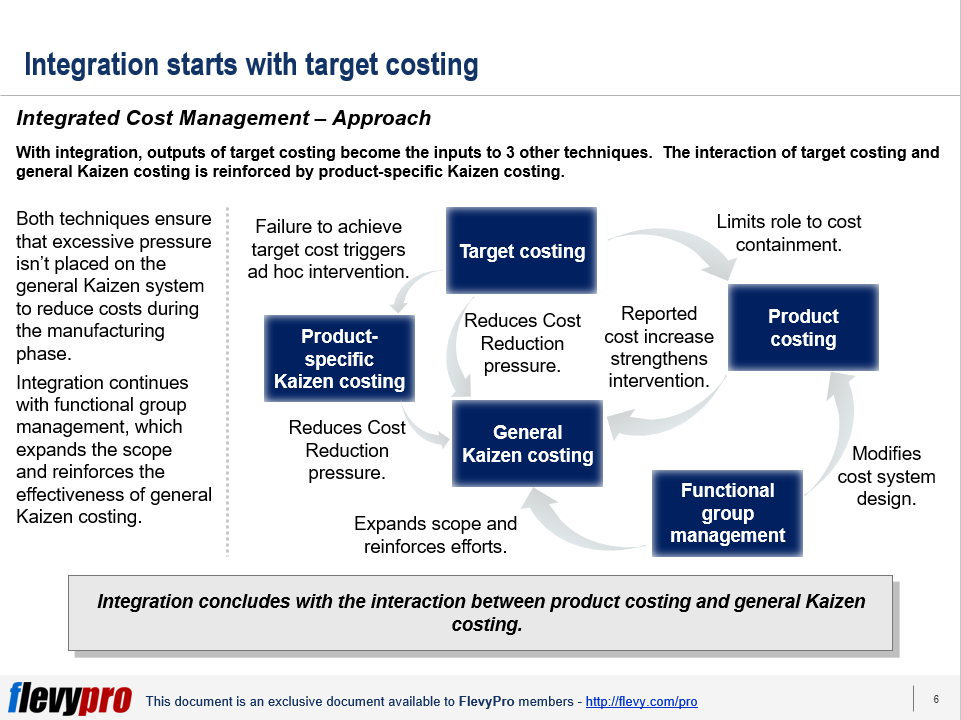
The Integrated Cost Management Approach focuses on the integration of cost management techniques which can lead to higher levels of cost reduction and superior overall performance.

The Integrated Cost Management Approach takes into consideration 5 Cost Management Strategies.

  1. Target Costing. This is the technique used or applied during the design stage.  It is a feed-forward mechanism that enables the retooling of the design of new products to reduce costs while maintaining the desired level of product functionality and quality.
  1. Product-Specific Kaizen Costing. This is a technique that enables the rapid redesign of a new product during the early stages of manufacturing to correct any cost overruns.  (Note: Kaizen is the general term for Continuous Improvement and often associated with Lean Management.)
  1. General Kaizen Costing. General Kaizen Costing is a technique that focuses on the way a product is manufactured with the assumption that the product’s design is already set. It is generally effective in addressing manufacturing processes that are used across several product generations.
  1. Functional Group Management. This is a technique that is used to break down the production process into autonomous groups and treat each as a profit center.
  1. Product Costing. Product Costing is a technique that coordinates the efforts of the other four (4) techniques by providing important, up-to-date information.

The 5 Cost Management Strategies enable organizations to better manage costs throughout the product life cycle, with just one (1) technique taking place during the product design and the rest during manufacturing.

The Key Takeaways

The application of the 5 Cost Management strategies has its key takeaways. These can be used as a guidepost in its application and a model of general concepts that organizations may consider.

One key takeaway is significant savings can still be achieved with short life cycle products and aggressive cost management focused on product design.   Taking to note this key takeaway, we have to consider that as the length of the manufacturing phase of the product’s life cycle increases, the opportunity for cost reduction increases.  Further, there is a need to explore the value of integrating multiple cost management during manufacturing.

Interested in gaining more understanding of Integrated Cost Management? You can learn more and download an editable PowerPoint about Integrated Cost Management here on the Flevy documents marketplace.

Are you a management consultant?

You can download this and hundreds of other consulting frameworks and consulting training guides from the FlevyPro library.

The 12 Areas of Post-merger Integration (PMI): Your Guide to Starting PMI the Right Way

Post-merger Integration is a highly complex process. It requires swift action as well as running the core business activities simultaneously. There is no one-size-fits-pic 1 Post-merger Integration (PMI) Integration Checklistall approach to a successful PMI Process. However, careful planning focusing on the strategic objectives of the deal and the identification and capturing of synergies will help maximize deal value.

Because of the complexity of the PMI process, it is of utmost importance that organizations—both the Buyer and Target, the integration team, and integration manager—have a guide that will provide them the detailed requirements of the process. The Post-merger integration framework has a structured approach that can direct attention to important integration areas to maximize deal value and achieve Operational Excellence. The inability to focus on priority areas can be a waste of resources, time, and investments.

The 12 Integration Areas

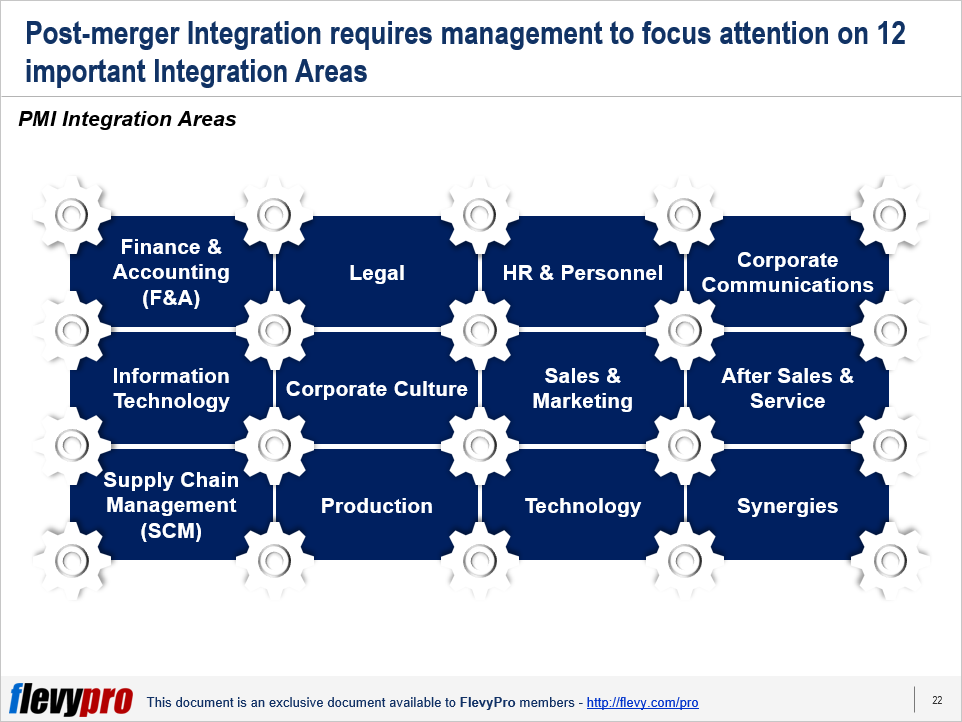
The Post-merger Integration framework drives a structured approach to identify important Integration Areas to focus on during the transition. There are 12 Integration Areas that need to be prioritized.

The first 2 integration areas within the full checklist:

  1. Finance & Accounting (F&A). This is an integration area that is focused on establishing the financial sustainability of the new organization. Financial & Accounting needs clear instructions and templates for financial reporting at Closing. The better the information, the few surprises there are due to poor reporting or absence of data. Financial & Accounting has 9 sub-areas that are essentially important for organizations to have a good appreciation and understanding of.
  1. Legal. The role of the legal function does not end at the Closing. Many legal items need to be listed and considered immediately after the Closing. Special events, such as acquisitions of minority shares or the formation of joint venture companies must be considered. Legal is one vital area in building the sustainability of the new organization.

The next 2 integration areas within the full checklist:

  1. HR & Personnel. Integral in the Integration Process, HR & Personnel is a key area in integration. Management of the HR Integration Team is a primary responsibility of the Buyer’s HR manager. There are 5 sub-areas under HR & Personnel that must be given important consideration.
  1. Corporate Communications. Successfully using the Buyer’s and Target’s corporate communication functions for announcing and explaining PMI progress is a net sum of many factors. Essentially, communicating PMI progress requires the effective use of the corporate communication functions of both Buyer and Target.

The third 3 integration areas within the full checklist:

  1. Information Technology (IT). The goal of the ICT Integration Process is to link the ICT networks of the acquired entity with the Buyer’s corporate ICT network. It is necessary to facilitate access to systems and services provided by the Buyer and collaborate with business/market areas. Often, the integration process is let by an ICT individual from the Buyer’s corporate/company ICT or business/market area ICT.
  1. Corporate Culture. Corporate culture has increasingly become a critical factor in integration success, particularly in cross-border M&A. An M&A deal often impacts on corporate culture, both on the Buyer’s and the Target’s side.
  1. Sales & Marketing. This is a difficult sensitive area to be changed in the integration process. Sales & Marketing contribute largely to organizational financial stability, hence primary consideration must be undertaken.

The last 5 PMI integration areas within the full checklist:

  1. After Sales & Service. This is increasingly becoming important in value creation. It is an added-value that strengthens Sales & Marketing capability to sustain the market.
  1. Supply Chain Management (SCM). This is undertaken at a later phase of integration as the fundamental change requires detailed planning and calculation.
  1. Production. This is one critical area where more experience and planning are required in decision making.
  1. Technology. The extent to which the integration focuses on Technology and R&D depends on the M&A strategy. If the purpose of the acquisition is to gain technology or strengthen existing capabilities, then this is when the integration will focus on technology.
  1.  Synergies. This an integration area that can mean new strengths and opportunities from combined knowledge and experiences.

Organizations must take adept steps in undertaking the Integration Checklist as this will enable both the Buyer and the Target to reach the most strategic state necessary for the 12 Integration Areas.

Interested in gaining more understanding of the Post-merger Integration (PMI) Integration Checklist? You can learn more and download an editable PowerPoint about Post-merger Integration (PMI) Integration Checklist here on the Flevy documents marketplace.

Are you a management consultant?

You can download this and hundreds of other consulting frameworks and consulting training guides from the FlevyPro library.

Utilizing Van Westendorp Price Sensitivity Meter (PSM) to Appreciate Consumers’ Willingness to Pay (WTP) for a Product

assorted-variety-of-fruits-2255903The decision for pricing a product or service isn’t as simple as it seems.  It is a key consideration for executives.  Pricing way above the rival products risks not attracting the required customers while charging way below the competitor products could be equally detrimental.
Manufacturers can utilize research to have a better understanding on what consumers are willing to pay for a product.  There are a host of research-based pricing approaches available—e.g., Monadic, Sequential Monadic, Conjoint Analysis, Van Westendorp Price Sensitivity Meter etc.—however, researchers often get confused on which one to use in a given product development phase.  Let’s discuss the Van Westendorp Price Sensitivity Meter approach for now.

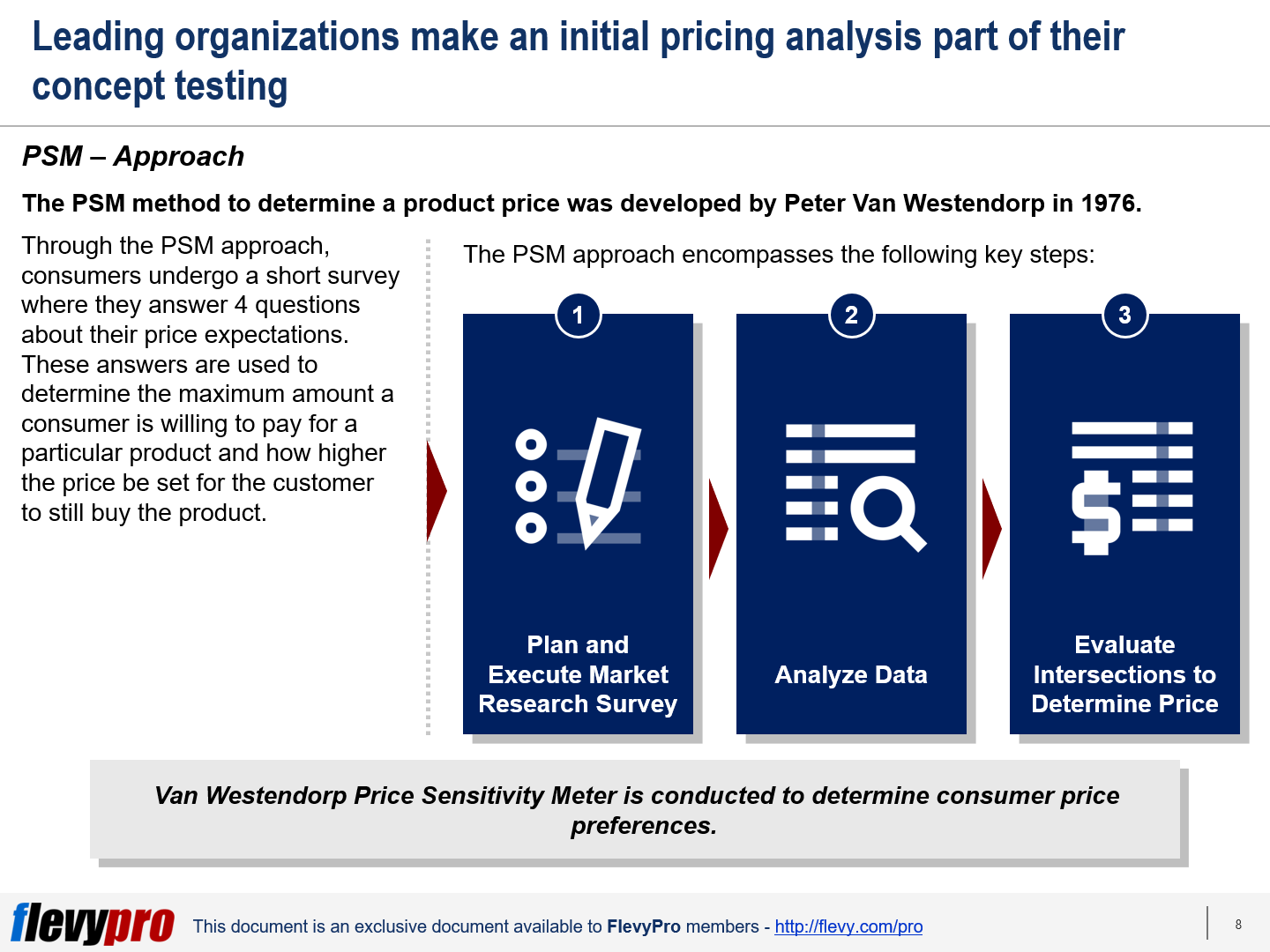
The Price Sensitivity Meter (PSM) is an easy-to-use method of evaluating price of a new product.  The method was developed by Peter Van Westendorp in 1976.  Through the PSM approach, consumers undergo a short survey where they answer 4 questions about their price expectations.  These answers are used to determine the maximum amount a consumer is willing to pay for a particular product and how higher the price be set for the customer to still buy the product.

The approach offers a ball-park figure for the price of a product, is easy to administer, requires less effort from the consumers, and the PSM results are communicated in the form of simple diagrams.  The approach, however, surveys only the “willingness to pay” attribute of a product, and is more appropriate for innovative products—as it is not easy to determine prices with competing products using this approach.  PSM analysis should be a part of your Pricing Strategy process.

The PSM approach encompasses the following key phases:

  1. Plan and Execute Market Research Survey
  2. Analyze Data
  3. Evaluate Intersections to Determine Price

Let’s discuss the first 2 phases of the approach.

Plan and Execute Market Research Survey

The initial phase of the PSM research entails deciding on the medium of the study and planning the logistics, design, resources, guidelines, and governance protocols for the survey.  More specifically, the phase involves:

  • Preparing the field research plans.
  • Determining whether the survey should be conducted online, telephonically, or face-to-face.
  • Identifying the consumers (respondents).
  • Assigning the required resources to the survey.
  • Getting the data collection tools and research instrument (questionnaire) ready.
  • The questionnaire includes the following questions:
    • At what price the product would become so expensive for you to even consider buying it?
    • Indicate the price that is expensive for you but you would still buy the product?
    • What would be the price that is too cheap for the product where you would start doubting its quality and not buy it?
    • Indicate the price of the product where you would consider it a great value for money (a bargain)?
  • Gathering data from the survey participants.

Analyze Data

The second phase pertains to analyzing the respondents’ data from the field survey.  This is done once the field data has been validated and cleansed of any inconsistent errors.  The steps taken in this phase include:

  • Ordering the 4 questions in a manner that it ranks prices as “Too Cheap,” “Bargain,” “Getting Expensive,” and “Too Expensive.”  The values of these ranks should be kept in numeric dollar values.
  • Plotting the responses of the survey participants on a graph.
  • Depicting the prices on the X-axis.
  • Representing the percentage of consumers who quoted the respective price (i.e. the cumulative frequency) on the Y-axis.
  • Reversing the values of the two curves.
    • The curves with the values “Too Cheap” and “Too Expensive” are drawn with inverse values. This creates two other curves.  These curves show the percentage of consumers who regard prices as “Getting Expensive” and “Bargain”.

Interested in learning more about the other phase of the Van Westendorp Price Sensitivity Meter?  You can download an editable PowerPoint on the Price Sensitivity Meter (PSM) here on the Flevy documents marketplace.

Are you a Management Consultant?

You can download this and hundreds of other consulting frameworks and consulting training guides from the FlevyPro library.

Strategy Development: Taking the High Road to COVID-19 Response

COVID-19 is shaping a “New Normal”—a Low Touch Economy that requires a strategic response.pic 1 Strategy Development Responding to COVID 19

The world is changing. Forced isolation and social distancing restrictions have been put into place with the advent of the COVID-19 health crisis. This is not expected to end soon but is expected to have a lasting effect on the world. In fact, a new generation of consumer behaviors is already being shaped.

The new world will not be better off or worse. It will be different. During this period of influx, some businesses will thrive in this change and reach accelerated success, while others will struggle to find their footing in all of the chaos. The Low Touch Economy is here.

The New Normal

The post-COVID-19 era will have an economy shaped by new habits and regulations based on reduced close contact interaction, tighter travel, and hygiene restrictions. While managing the current health crisis is the first priority, companies must start adapting its strategic response to the mid and long-term ripple effects of COVID-19.

Businesses, to survive, must learn how to effectively respond to COVID-19 that is marked with plenty of ups and downs and economic uncertainty. There will be fundamental shifts that are here to stay and there will be industries that will be turned upside down. Until there is a vaccine or herd immunity, the base case scenario will be continuous up and down of disruptions for the coming 2 years. Strategy Development now calls for business to make the right strategic approach.

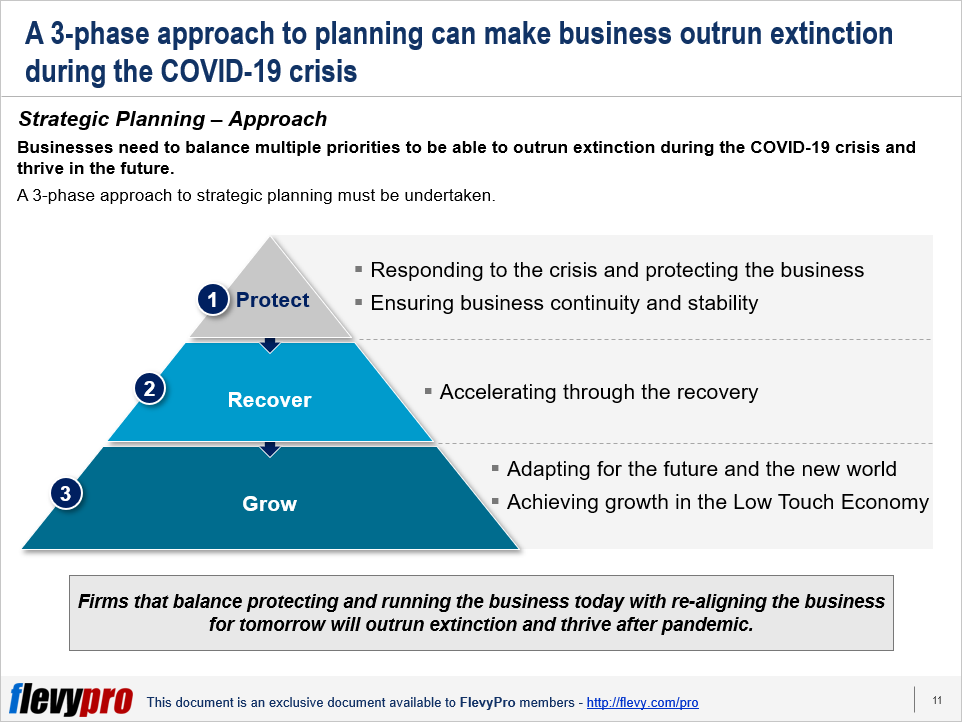
The 3-phase Approach to Strategic Planning

During turbulent times, businesses must have the agility to switch from defense to offense. Taking the 3-phase approach to Strategic Planning will prepare organizations for the Low Touch Economy.

Phase 1: Protect

The first phase is focused on acting now to protect and run the business today. It is basically responding to the crisis and protecting the business. The primary objective of Phase 1 is to ensure the continuity and stability of the business despite the ongoing crisis.
This is best undertaken when employees and customers are grappling with one basic emotion and that is fear. The organization is faced with a declining revenue with prospects of liquidity freeze. Unfortunately, time horizons at this phase also remain uncertain.

When these scenarios are happening, the organization must strive to undertake strategies that will both protect the business, as well as ensure its continuity and stability. One strategy that must be undertaken is to put the safety of employees and customers first. With the advent of COVID-19, this is considered the most urgent thing to do and the most important. Once this has been taken care of, senior leaders can set up a war room where they can tackle immediate challenges.

The war room discussions must shift from just being reactive to being proactive when it comes to crisis management. At this point, model scenarios that are developed must be more aggressive than any of the team can think of. It has to be aggressive in the sense that it is capable of protecting the business from the disruption that COVID-19 is greatly inflicting on the organization.

At this time, during this phase, this is the best time too to invest in Innovation Management and R&D. While others are stalling, the most innovative companies spend more on R&D during the recession. The other 2 phases are Recover and Grow. Phase 2, Recover is focused on accelerating through the recovery and Phase 3, Grow is focused on achieving growth in the Low Touch Economy.

In what phase is your organization now? Are you Protecting? Recovering? or Growing?

Interested in gaining more understanding of Strategy Development to respond to COVID-19? You can learn more and download an editable PowerPoint about Strategy Development: Responding to COVID-19 here on the Flevy documents marketplace.

Are you a management consultant?

You can download this and hundreds of other consulting frameworks and consulting training guides from the FlevyPro library.

In the Midst of COVID-19, Is Your Supply Chain Resilient?

Supply Chain Resiliency is the capability of the Supply Chain to be prepared for unexpected risk events. It is the Supply Chain’s ability to respond and recover pic 1 Supply Chain Resiliencyquickly to potential disruptions. It can return to its original situation or grow by moving to a new, more desirable state in order to increase customer service, market share, and financial performance.

Resilience is currently an increasing concern in the Supply Chain caused by globalization. The Supply Chain is globally being subject to diverse types of disturbances. The largest disruption so far in the global Supply Chain in modern history was the earthquake and tsunami in Japan in March 2011. With the rising level of logistical complexity, the resiliency of the Supply Chain has not kept pace. These disturbances need to be handled in the right way, compelling the use of tools and approaches that can support resilient Supply Chain decisions.

With the onset of the COVID-19 pandemic, resiliency in the Supply Chain is further emphasized.

Understanding Supply Chain Resilience 

The risk of Supply Chain disruption is increasing.  A recent study by Aon Risk Solutions showed that the percentage of global companies reporting a loss of income due to a Supply Chain disruption increased from 28% in 2011 to 42% in 2013.  The MIT Scale Network Study further showed that many large companies are unable to create contingency rules and procedures for operations during a complex, high-risk event.

According to the MIT study, approximately 60% of surveyed managers either do not actively work on Supply Chain risk management or do not consider their company’s risk management practice effective. Managers have been found to be lacking in a framework that will guide them in the deployment of risk management practices. In fact, it has been noted that there is little understanding of risks resulting in a lack of knowledge of what kind of framework fits a particular Supply Chain dynamics.

For Supply Chain Management to keep up with the increasing level of logistical complexity, there is a need to reconfigure the Supply Chain.

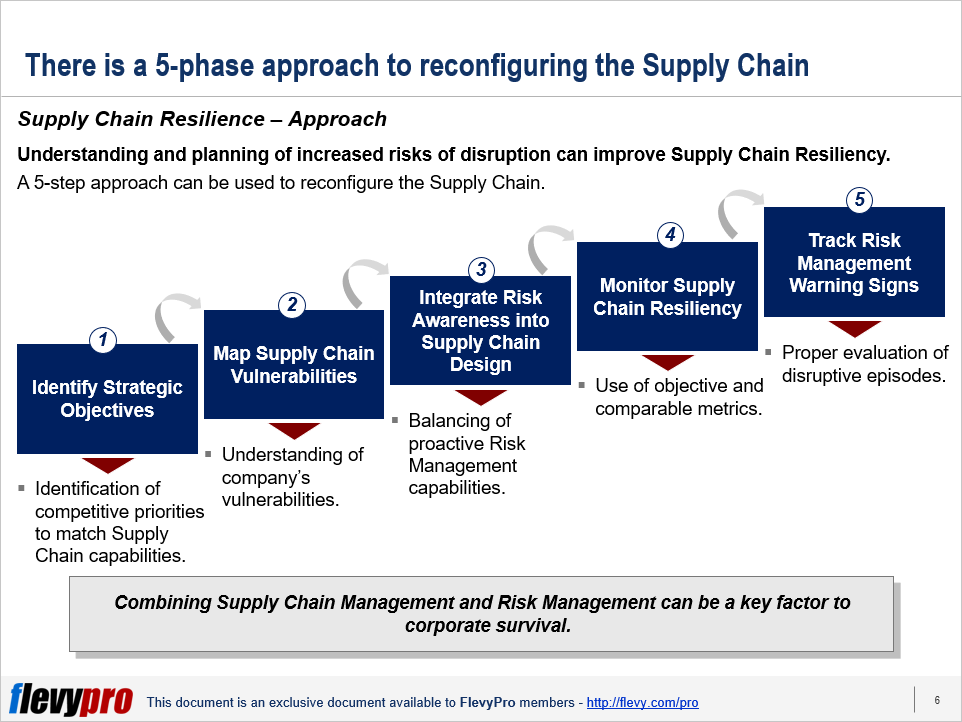
The 5-phase Approach to Supply Chain Resilience

In 2005, Cisco had difficulty coping when Hurricane Katrina struck. The Supply Chain performance level was not maintained to cope with the sudden surge in orders for new equipment to replace damaged telecommunication infrastructure.  The Cisco teams cannot locate all products in the Supply Chain or understand the financial impact of emergency sales. However, in 2011, that was a turning point for Cisco. Cisco had deployed a very solid Supply Chain resiliency program that addressed the impact of external vulnerabilities and the aftereffects it caused to the Supply Chain.

Cisco has succeeded by executing a 5-phase approach to Supply Chain Resiliency.

In reconfiguring its Supply Chain to make it more resilient, Cisco first identified its strategic objectives.

Phase 1: Identify Strategic Objectives. The first phase is focused on identifying competitive priorities for particular product categories. It matches priorities with Supply Chain capabilities.

Through Strategic Planning, Cisco was able to build its competitive advantage which depended on its ability to match global opportunities to outsource production with global market opportunities. This is known as the Cisco Lean Model.

Phase 2: Mapping Supply Chain Vulnerabilities. This focused on understanding the company’s vulnerabilities. Supply Chains are vulnerable on many fronts—political upheavals, regulatory compliance mandates, increasing economic uncertainty, natural disasters, etc.  Being aware of the vulnerabilities will enable the organization to come up with the appropriate design to achieve Supply Chain Resiliency.

In undertaking the second phase, Cisco focused on supporting a responsible global Supply Chain characterized by product differentiation, high value, and high margins. Mitigation measures were also implemented to make a resilient Supply Chain.

With the 5-phase approach, Cisco was able to achieve a resilient Supply Chain capable of effectively managing disruptions. It has also prepared them in addressing risk management warning signs and deploying the appropriate reactive tools to every kind of significantly disruptive event.

Interested in gaining more understanding of Supply Chain Resiliency? You can learn more and download an editable PowerPoint about Supply Chain Resiliency here on the Flevy documents marketplace.

Are you a management consultant?

You can download this and hundreds of other consulting frameworks and consulting training guides from the FlevyPro library.