“Knowledge has power because it controls access to opportunity and advancement.” – Peter Drucker

The 21st century is undoubtedly a century of knowledge. The everyday usage of available advanced information and business technologies, and internet in business activities just show how rampant corporations are engaged in information exchange and Knowledge Management.
In the light of globalization, companies are now exposed to an unpredictable and complex competitive environment. Pressures are put on companies to adapt quickly to survive in the competitive market. The vital strategic resource is Knowledge. Companies have started to realize the major value of an intellectual resource. The central role of Knowledge Management in making a quality decision has never been emphasized as much as today.
Intellectual resources and Knowledge are now contributing to revenue generation and increasing reputation. It has contributed to creating barriers to entry of potential competitors, increase customer loyalty, and create innovation. In today’s world, the success of the organization now depends largely on continual investment in learning and acquiring new Knowledge that creates new business and improves current performance.
Understanding Knowledge Management
Knowledge Management (KM) is a multidisciplinary approach to achieving organizational objectives
It is an integrated approach to gathering, analyzing, storing, and sharing knowledge and information within an organization. It ensures that the right information is delivered to the appropriate place or person at the right time to enable informed decision making.
An enterprise-wide ability must be created to transition data and information into critical knowledge. This is to ensure service stability, maintainability, and performance leading to organization wisdom.
Knowledge Management evolves around 3 primary spheres that are closely integrated with each other.
- Technology. Technology provides a secure central space where employees, customers, partners, and suppliers exchange information, share knowledge and guide each other and the organization to better decisions.
- KM Processes. KM Processes include standard processes for knowledge contribution, content management, retrieval
- People. This refers to the participation of team members in knowledge sharing, collaboration, and reuse to achieve business results.
At Flevy, we’ve developed a Knowledge Management Primer that examines and discussed the purpose and nature of the key components of Knowledge Management. It demystifies the KM field by explaining in a precise manner the key concepts of KM tools, strategies, and techniques, and their benefits to organizations.
The quest to set up a Knowledge Management system requires an understanding of the essential elements integrated within the Knowledge Management Approach. This includes an understanding of the DIKW Model or Pyramid, the importance of Knowledge Assets, and the structure and priority of information based on its Knowledge Hierarchy.
What is Knowledge Hierarchy

- Operational Knowledge. The focus of Operational Knowledge is to gain operational effectiveness. It helps organizations understand how service performance, compliance, and overall IT operational effectiveness is managed.
- Tactical Knowledge. Tactical Knowledge is focused on service value. It helps organizations understand how to manage and ensure service value.
- Strategic Knowledge. Strategic Knowledge is focused on benchmarking and advanced analytics. It helps organizations understand the effects of operational decisions.
In the Knowledge Hierarchy, it must ensure that resulting knowledge is well defined, specific, comprehensive, and with high average quality information.
Interested in gaining more understanding of Knowledge Management? You can learn more and download an editable PowerPoint about Knowledge Management (Primer) here on the Flevy documents marketplace.
Are you a management consultant?
You can download this and hundreds of other consulting frameworks and consulting training guides from the FlevyPro library.


 Changing the behaviors of people is the foremost issue with every transformation initiative.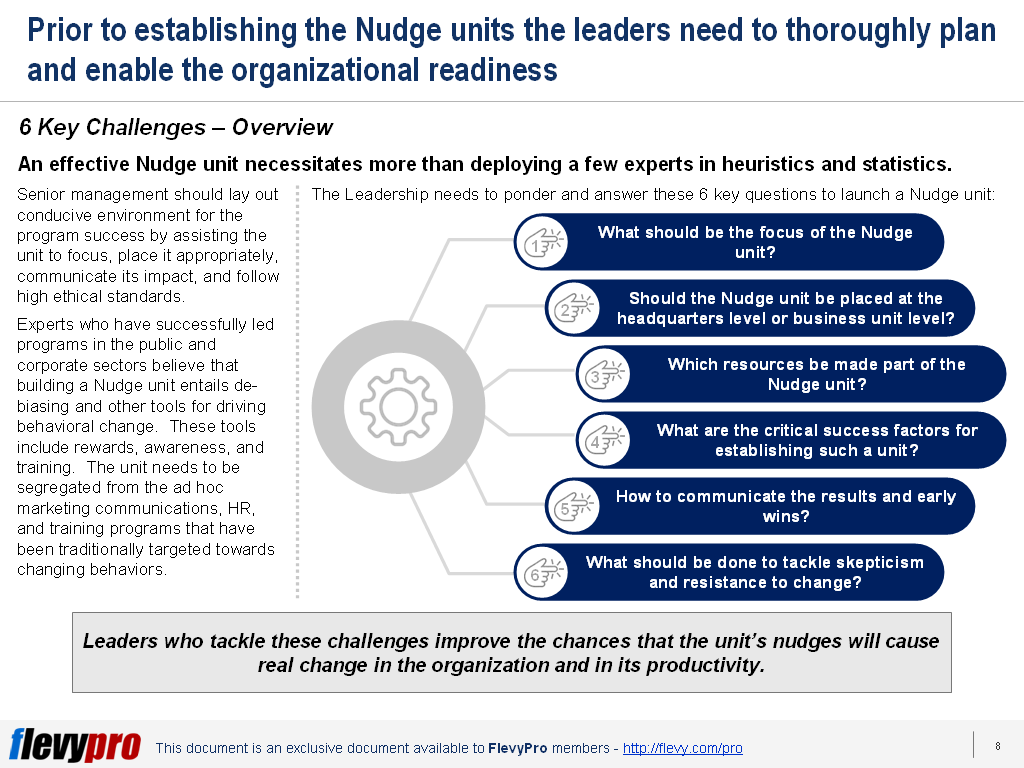



 Takeovers can turnaround companies in a short period of time, but there is a significant degree of risk to be anticipated and mitigated prior to undertaking such transactions. Lack of careful deliberation of the potential risks, insufficient planning, weak execution, and lack of focus on Post-merger Integration are the major reasons why many Merger & Acquisition deals fail to achieve their desired goals.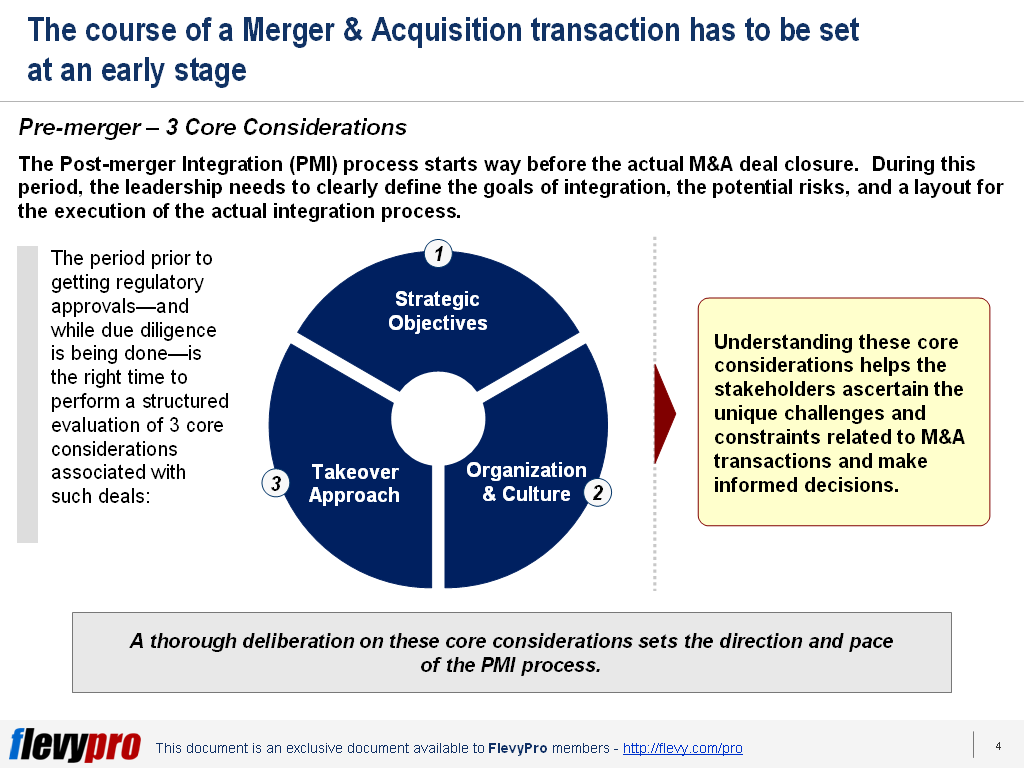


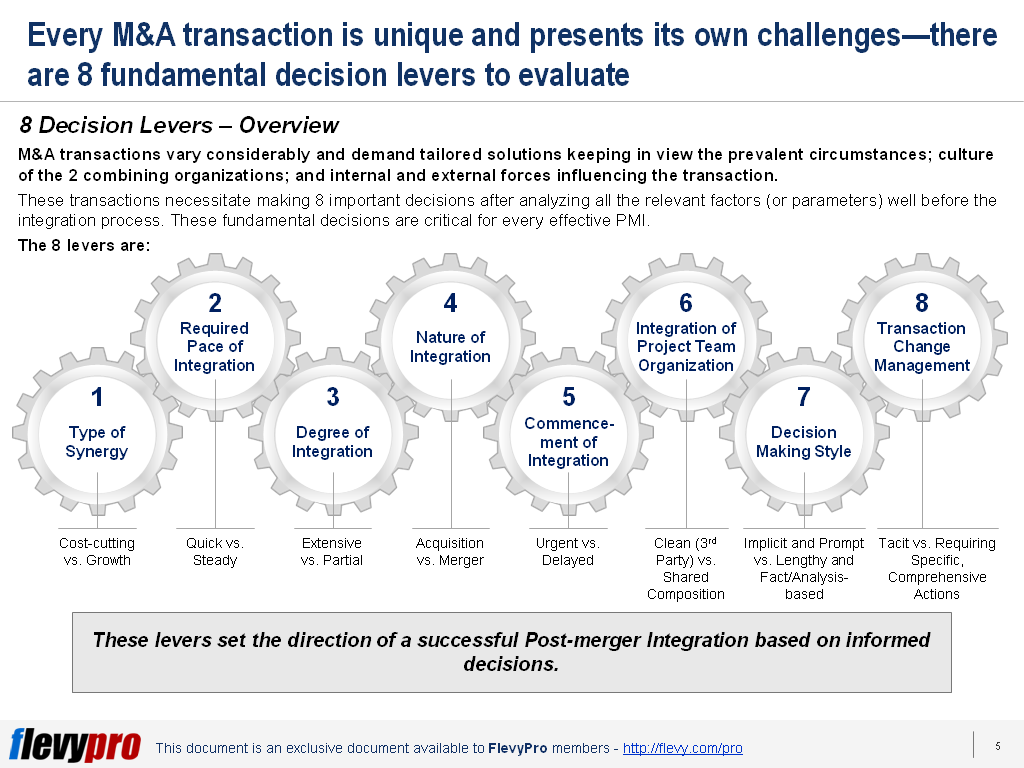

 Stiff market competition, expansion into new territories, product portfolio extension, and gaining new capabilities are the prime reasons why more and more organizations are seriously looking into the prospects of—and carrying out—

 difficult when the competitive environment changes. Likewise, high performance as measured by shareholder returns is impossible to sustain over a long period of time. No company consistently beats the market.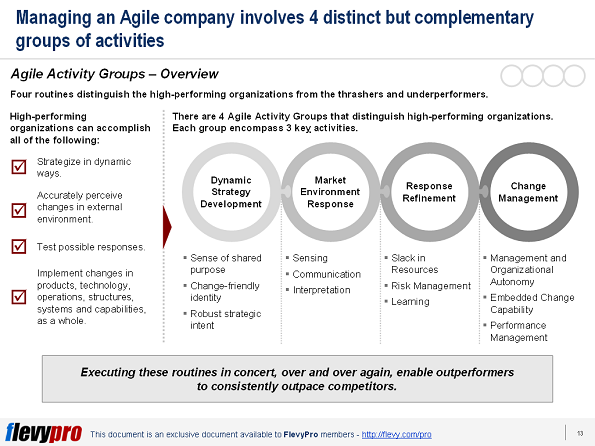

 importance. The struggle between competing firms has moved from tangible resources to intangible resources where knowledge and the ability to use knowledge have crucial roles.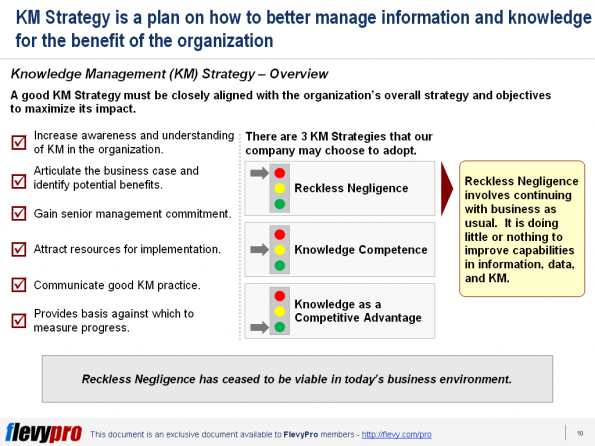

 incoherence between a company’s product and its overall